

As a digital subscriber, you’ll receive unlimited access to Horn Book web exclusives and extensive archives, as well as access to our highly searchable Guide/Reviews Database.
To access other site content, visit The Horn Book homepage.
To continue you need an active subscription to hbook.com.
Subscribe now to gain immediate access to everything hbook.com has to offer, as well as our highly searchable Guide/Reviews Database, which contains tens of thousands of short, critical reviews of books published in the United States for young people.
Thank you for registering. To have the latest stories delivered to your inbox, select as many free newsletters as you like below.
No thanks. Return to article
(1)
4-6
Illustrated by
Yas Imamura.
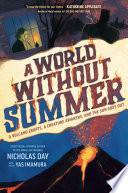
On April 10, 1815, on the small Indonesian island of Sumbawa, the volcano Tambora erupted with such explosive force that it changed Earth’s climate and thus the course of human history. The island was devastated by lava, rock, and ash, but the event -- far more explosive than the eruptions of Vesuvius or Krakatoa -- was little more than a footnote in many newspapers on the other side of the globe. In fact, the ash from this eruption rose high into the stratosphere and wreaked havoc around the world: torrential rain leading to unprecedented flooding; rapid changes in temperature that either caused or resulted from mysterious sunspots; dramatically shortened growing seasons without enough sun and rain; famine, disease, and rebellion among the people; and, years later, a global cholera pandemic. Day (Sibert and Boston Globe–Horn Book Award winner for The Mona Lisa Vanishes, rev. 9/23) crafts a remarkable nonfiction narrative that jumps forward and backward through time and across the globe, pulling seemingly disparate threads together and frequently breaking the fourth wall to ask readers to consider historical methodology, storytelling tropes, literary themes, and lessons learned. The subplot about Mary Shelley and the birth of Frankenstein initially seems forced -- until it does not: Day reveals the book and its themes to be a product of this time, this “world without summer.” Black-and-white illustrations by Imamura, ranging from lively vignettes to dramatic full-page images, are interspersed (some final art not seen). An extensive bibliography, thorough source notes, and an index are appended.
Reviewer: Jonathan Hunt
| Horn Book Magazine Issue:
November, 2025